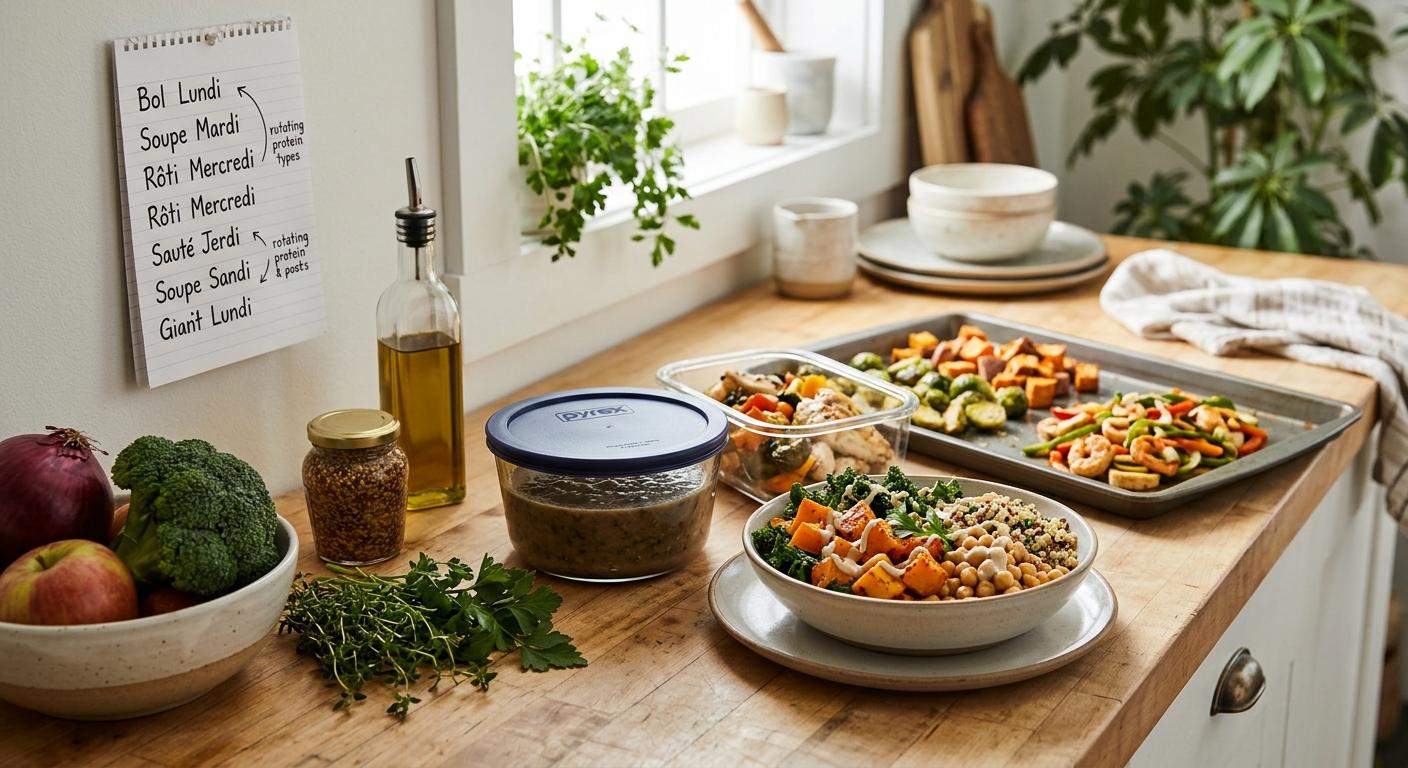

To plan seasonal, diverse meals, start with a few seasonal ingredients and build the week around flexible formats: a grain bowl, soup, sheet-pan dinner, stir-fry and leftovers. Rotate proteins, grains and seasonings. You get different meals without buying dozens of ingredients or spending hours in the kitchen.
This approach combines two useful habits: cooking with ingredients available throughout the year and avoiding repetitive dinners. Use the practical method, sample fall menu and straightforward answers below to make it work for your schedule, budget and household.
What is seasonal and diverse meal planning?
Seasonal meal planning means building part of your menu around foods that are currently being harvested or that store well for later use. It also accounts for what is actually available near you, along with your budget, schedule and household preferences.
Eating a diverse diet does not mean cooking seven brand-new recipes. Variety can come from vegetables, proteins, grains, herbs, textures and cooking methods. The same squash can be roasted for a rice bowl and blended into soup: the ingredient repeats, but the meal does not.
Why combine seasonal cooking with variety?
It naturally refreshes your menu. Summer tomatoes and corn give way to fall squash and apples, then winter root vegetables. This rhythm provides a different starting point as the months change, without requiring a new recipe every night.
It keeps grocery shopping flexible. A rigid recipe can leave you hunting for an unavailable or expensive ingredient. A flexible meal format lets you swap squash for carrots, chicken for lentils or rice for barley based on prices and your inventory. Seasonal food is not automatically the cheapest option, however: availability, store and package format also affect price.
It reduces last-minute decisions. A few decisions made in advance are enough: which vegetables to use first, what to cook on busy nights and which portions will become lunches. The plan stays flexible enough to handle a schedule change without starting over.
A 5-step method for planning your week
1. Start with your inventory and two or three seasonal foods
Check your fridge, freezer and pantry first. Then add two or three seasonal fruits or vegetables your household genuinely enjoys. If you already have carrots and half a cabbage, plan around them before adding more produce to your list.
2. Choose meal formats instead of seven fixed recipes
For example, plan a grain bowl, soup, roasted protein and vegetables, stir-fry and a family favourite such as tacos or pizza. Fill the remaining nights with planned leftovers and a flexible dinner. Put the quickest meals on your busiest days and leave room for change.
3. Rotate four building blocks
A base + a vegetable + a protein + a flavour is a simple formula with many combinations. Rice, roasted squash, chickpeas and yogurt sauce make a bowl. Pasta, squash purée, lentils and sage create a very different dish. Even changing only the sauce or cooking method can make familiar ingredients feel new.
4. Reuse ingredients, not necessarily the same dish
Cook a useful quantity of rice, roasted vegetables or lentils, then give it two roles. Cabbage can be crunchy in Monday’s slaw and stir-fried with rice on Thursday. Leftover chicken or tofu can move from a sheet-pan dinner to fried rice. This reduces preparation without making the week repetitive.
5. Turn the menu into a grocery list with substitutions
Write quantities after choosing meals and checking your inventory. Add an alternative for interchangeable ingredients: broccoli or frozen green beans, rice or pasta, chicken or tofu. To build your list around sales, read our guide on how to compare grocery prices while planning diverse meals.
Which seasonal foods should you choose throughout the year?
These examples are suited to Quebec and eastern Canada. Harvest dates vary by region and year, so use these categories as a starting point and check what is available where you shop.
In spring
Look for spinach, radishes, asparagus and rhubarb when available. Add them to omelets, pasta, salads or homemade compotes. Root vegetables stored since fall can still round out your meals.
In summer
Tomatoes, cucumbers, zucchini, green beans, corn and berries lend themselves to fresh, colourful meals. Rotate composed salads, grilled dishes, quick stir-fries and no-cook dinners. Freeze or cook surplus produce before it goes to waste.
In fall
Squash, apples, beets, carrots, cabbage and mushrooms work well in soups, roasted dishes, stews and warm salads. It is also a good time to freeze portions of soup or sauce for busier weeks.
In winter
Potatoes, carrots, beets, onions, cabbage and storage squash remain useful starting points. Round them out with frozen or canned produce, legumes and grains. Seasonal does not have to mean freshly harvested or exclusively local.
For general guidance on building balanced meals, you can also consult Canada’s Food Guide and adapt its suggestions to your needs, allergies and preferences.
A seasonal and diverse 7-day dinner menu
This fall menu shows how to share ingredients without serving the same dish twice. Swap proteins to suit your preferences and adjust quantities for your household.
Monday: rice bowls with roasted squash, chickpeas, spinach and yogurt sauce. Roast enough squash for the next night.
Tuesday: squash soup with toast and cheese. The texture and format change completely, even though squash appears again.
Wednesday: roasted chicken or tofu with carrots and potatoes. Save a portion of protein and vegetables for Thursday.
Thursday: cabbage fried rice with the leftover chicken or tofu. A different sauce transforms ingredients that are already cooked.
Friday: lentil tacos with a crunchy cabbage and apple slaw. Raw cabbage offers a different texture from the previous night’s stir-fry.
Saturday: homemade pizza with mushrooms, onions and cheese, served with a salad or any vegetables that need using up.
Sunday: leftovers or a flexible dinner. Combine remaining portions, prepare lunches and note what should be used first the following week.
The goal is not seven complicated recipes. It is a week varied enough to enjoy and simple enough to repeat.
Build a grocery list that supports variety
Fruits and vegetables: choose a few seasonal products and backup formats such as frozen vegetables. Assign them to meals before finalizing your list to avoid bags of single-use ingredients.
Proteins: rotate eggs, tofu, fish, poultry, meat and legumes according to your habits. Two or three choices can be enough for the week if the recipes and seasonings change.
Grains and starches: keep two versatile options, such as rice and pasta or bread and potatoes. There is no need to open a new package for every recipe.
Flavours: a sauce, herb or spice blend can refresh a familiar base. Choose a few versatile seasonings instead of a condiment you will use only once.
To adapt this method to lunches, busy schedules and family-sized portions, see our meal plan for a family of 4.
Make planning easier with FoodPilot
FoodPilot generates meal ideas based on your tastes, budget and grocery specials, then organizes your shopping list. Ask for meals featuring your seasonal ingredients, replace suggestions that do not suit you and save favourite recipes for future weeks. Try FoodPilot to turn your menu into a grocery list without recalculating everything by hand.
Frequently asked questions about seasonal, diverse meals
How can you vary meals without buying more ingredients?
Use the same bases in different formats. Cabbage can move from slaw to stir-fry, and lentils from soup to tacos. Change the sauce, texture or cooking method before adding another ingredient to your cart.
Is seasonal cooking always cheaper?
No, not automatically. Price also depends on the harvest, transportation, store and format. Compare unit prices, check sales and use substitutions. Planning mainly helps you buy the right quantities and use what you already have.
Can you plan seasonal meals in winter?
Yes. Start with root vegetables, cabbage, onions, potatoes and storage squash, then add frozen, canned or preserved foods from earlier seasons. Account for what is genuinely available in your region.
How many different meals should you plan each week?
There is no required number. For many households, four or five cooked dinners, planned leftovers and one flexible night are enough. The goal is to gradually vary foods and flavours while respecting your time and budget.
In short
To succeed with seasonal and diverse meal planning, start with a few seasonal foods, choose flexible formats and reuse your bases in different dishes. A short but well-distributed grocery list, simple substitutions and planned leftovers complete the system.