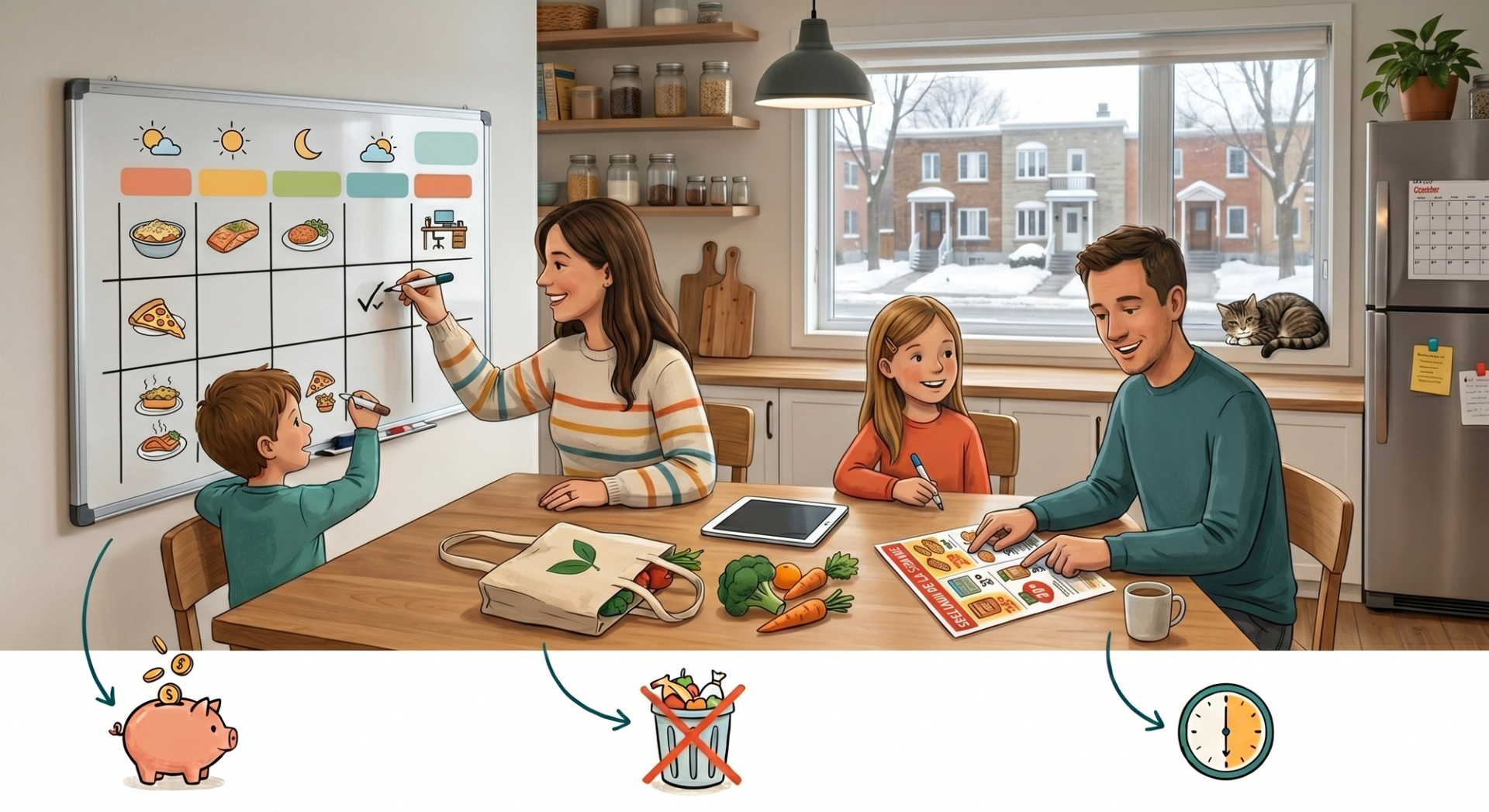

Why Meal Planning Actually Makes a Difference
Before getting into the how, let's talk about the why, because the numbers are hard to ignore.
When you walk into a grocery store without a list or a plan, you shop on impulse. Sales pull you in even when you don't need something, you duplicate pantry items you already have, and you forget the things you actually came for. The result: a mid-week grocery run because something is missing, a takeout order because dinner fell apart, and produce going soft at the back of the fridge.
Meal planning breaks that cycle. It lets you shop with purpose, take advantage of real deals at Sobeys, Loblaws, No Frills, Walmart or your local store, and cook without scrambling at 5:30 pm after a long day.
Step 1: Check What You Already Have
Before you think about recipes, open your fridge, freezer and pantry. Most families can make 2 or 3 meals with what they already have, without spending a dollar.
Write down what needs to be used first: vegetables starting to soften, meat approaching its best-before date, leftovers from last week. Those become your priority meals for the week.
Step 2: Check the Flyers Before You Pick Your Recipes
This is where a lot of families get it backwards. They choose their recipes first, then buy the ingredients at full price. Do it the other way around.
Look at the flyers for your usual store before you plan anything. If chicken breasts are $6.99/kg at No Frills this week, build 2 or 3 meals around chicken. If ground pork is on sale, it's a good week for meatballs or a hearty pasta bake.
This one habit alone can cut your grocery bill by 20 to 30 percent every week.
Proteins worth watching for on sale:
- Chicken thighs (often cheaper than breasts and just as versatile)
- Pork shoulder (perfect for slow cooker pulled pork or a Sunday roast)
- Ground beef (freeze whatever you don't use right away)
- Eggs (one of the most affordable proteins and always useful)
Step 3: Plan 5 Dinners, Not 7
One of the most common beginner mistakes is trying to plan every meal of every day. It's overwhelming and it rarely lasts past Tuesday.
Start with dinners only, and aim for 5 out of 7 nights. The other two nights, plan for leftovers or a free night that might include eating out or ordering in.
For your 5 dinners, aim for this kind of balance:
- 2 quick meals (20 minutes or less): pasta, a hearty omelette, a simple soup. For the busy weeknights when energy is low.
- 2 medium meals (30 to 45 minutes): sheet pan chicken, a stir fry with rice, homemade tacos.
- 1 weekend meal: something more involved, or a big batch recipe that gives you leftovers for later in the week.
Step 4: Cook Double and Use Leftovers on Purpose
Leftovers aren't a backup plan, they're a strategy. A big pot of soup on Sunday takes care of Monday and Tuesday lunches. A pork roast covers Sunday dinner and Monday sandwiches.
A few classic transformations worth keeping in your back pocket:
- Roast chicken → chicken soup → chicken quesadillas
- A double batch of ground beef → pasta sauce one night, shepherd's pie the next
- A big pot of rice → side dish one night, fried rice with vegetables later in the week
This approach cuts your cooking time during the week and stretches every dollar you spend at the store.
Step 5: Build a Grocery List That Actually Works
Once your meals are planned, write your list by store section: produce, meat, dairy, dry goods, frozen. It saves time in the aisles and prevents the forgotten items that send you back for a second trip.
A few rules worth keeping:
- Be specific with quantities ("1 kg boneless chicken thighs" instead of just "chicken")
- Check what you already have before adding anything to the list
- Note an acceptable substitute for expensive items (green beans instead of out-of-season asparagus, for example)
- Add household essentials so you're not making separate trips during the week
The Real Barrier: Time and Consistency
Even knowing all this, plenty of families still don't plan their meals. Why? Because it takes discipline and time upfront, two things that are hard to find when you're managing a busy household.
That's where an app like FoodPilot changes things. Instead of spending 30 to 45 minutes searching for recipes, checking flyers and building a list, FoodPilot handles it for you. It generates a meal plan tailored to your family, works within your budget, and builds your grocery list automatically with deals from stores near you already factored in.
The result is that planning goes from 45 minutes down to under 5 minutes a week. And the savings are real, often $80 to $120 less per week for a family of four.
Where to Start This Week
You don't need a perfect system to get going. Here's the bare minimum for this week:
- Check the flyers for your usual grocery store (5 minutes)
- Pick 2 proteins that are on sale
- Plan 3 dinners around those proteins
- Write your list before you leave the house
That's it. Even just that will make a difference on your bill this week.
When you're ready to automate the whole process and save even more, FoodPilot is free to get started. Visit foodpilot.ai and let the app do the work for you.